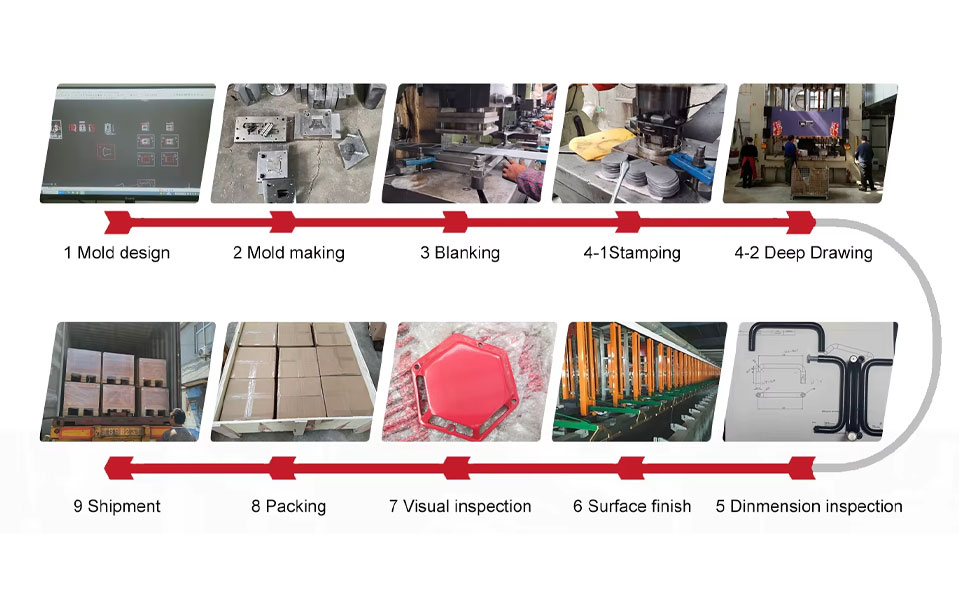
托盘脚和嵌套塞 值得选择,因为他们 直接减少仓储空间,降低运输成本,延长托盘使用寿命,提高仓库安全性 — 所有这些都不需要完全重新设计您的物流基础设施。这两个组件协同工作,将标准平板托盘转变为可堆叠、节省空间且结构加固的平台,可在工业供应链的反复要求下可靠地运行。 在 宁波大盛金属制品有限公司 ,我们专注于各行业精密部件的金属冲压、拉深和焊接。托盘脚和嵌套塞是我们按照严格的客户规格制造的组件之一,使我们能够详细了解这些零件的性能,以及制造精良的组件与在负载下过早失效的组件的区别。以下分析解释了在任何依赖于高效、耐用的托盘物流的操作中选择托盘脚和嵌套塞的实际案例。 托盘脚和嵌套塞的实际用途 在研究为什么这些组件值得选择之前,准确了解它们是什么以及它们如何在托盘系统中协同工作是很有用的。 托盘脚 是结构插件——通常由压制钢、冲压金属或高密度塑料制成——固定在板托盘甲板的下侧角和边缘上。它们将托盘表面抬离地面,为叉车叉齿和托盘搬运车进入创造必要的间隙。它们还承受堆叠货物的压缩载荷,并将该载荷转移到堆叠配置中的地板或下面的托盘上。 嵌套插头 是精密成型的嵌件,适合每个托盘脚的开口顶部。当空托盘堆叠起来进行存储或返回运输时,上托盘上的嵌套插头插入下面托盘的脚中,将堆叠锁定对齐并防止横向移动。这种联锁作用可以实现受控、稳定的嵌套,这一功能将可嵌套托盘系统与传统的块式托盘或纵梁托盘区分开来。 这两个组件共同定义了可嵌套托盘的性能特征:其承载能力、堆叠比率、尺寸稳定性以及与自动化搬运设备的兼容性。 嵌套托盘的节省空间优势 选择托盘脚和嵌套塞的最直接可量化的好处是大大减少了空托盘的存储空间。在传统的物流操作中,空托盘占据了大量的仓库占地面积和回程运输量。一个标准的木块托盘大约是 150 毫米高 ,这意味着 10 个托盘堆叠占据 1,500 毫米的垂直空间。精心设计的可嵌套托盘系统具有精密成型的脚和嵌套塞,可将堆叠增量减少至 每个附加托盘 30–50 毫米 . 实际上,这意味着能够存放 10 个传统托盘的空间可容纳 30 至 50 个可嵌套托盘 在同一个足迹中。对于每月管理数千次托盘移动的运营来说,这种差异意味着仓库租赁成本、空托盘管理处理劳动力以及退货运费的显着降低。 对退货物流的影响 退货物流——将空托盘从交货目的地运回配送中心或制造工厂——是闭环供应链中的一个重要成本中心。当托盘因支脚和塞子安装得紧密而紧密嵌套时,以前运载 20 个空传统托盘的一辆卡车可以运载 60 至 100 个可嵌套托盘 在相同的装载空间内。回程次数的减少直接降低了每个托盘周期的燃料成本、驾驶员工作时间和碳排放量。 结构负载能力和托盘刚性 托盘脚不是被动垫片——它们是决定托盘可以安全承载多少负载的结构部件。每只脚的几何形状、壁厚、材料等级和制造精度直接决定托盘的静态负载能力(静止在地板上时可以承受的重量)、动态负载能力(叉车移动时可以承载的重量)和货架能力(当其端部不受货架横梁支撑时可以支撑的重量)。 金属托盘支脚——尤其是那些通过深拉或精密冲压生产的托盘支脚——在高负载应用中比模制塑料支脚具有显着的优势。压制钢脚在压应力下保持其几何形状,在持续负载下不会随着时间的推移而蠕变,并在极端温度下抵抗变形。正确指定的钢托盘脚可以支撑 每个托盘的静态负载超过 5,000 公斤 当正确分布在四个或六个接触点上时。 脚材质 典型静态负载能力 温度范围 持续负载下的蠕变 可回收性 冲压钢 3,000 – 6,000 公斤 -40°C 至 300°C 无 100% 高密度聚乙烯 1,000 – 2,500 公斤 -30°C 至 80°C 中等 部分 聚丙烯 800 – 2,000 公斤 -20°C 至 100°C 中等 部分 铝合金 2,000 – 4,000 公斤 -50°C 至 200°C 无 100% 托盘脚材料的负载能力、耐温性、蠕变行为和可回收性比较 嵌套塞子如何有助于结构稳定性 嵌套塞不仅仅是对齐辅助工具——当尺寸正确并按照严格的公差制造时,它们可以为托盘板组件增加可测量的刚性。精确贴合足部腔体的塞子将侧向力分布在足部的整个横截面上,而不是将应力集中在足部和踏板之间的连接点处。这降低了在叉车装卸和卡车运输过程中经常发生的侧向装载条件下脚分层或拉穿故障的风险。 与自动处理和输送系统的兼容性 现代仓库和配送业务越来越依赖自动化处理系统——输送线、分拣设备、自动存储和检索系统 (AS/RS) 以及机器人拣选单元。这些系统对其处理的托盘提出了严格的尺寸要求。脚形状不一致、轮廓变形或嵌套塞位置不精确的托盘会堵塞传送带、与传感器阵列错位,并导致取放周期失败。 精密制造的托盘脚和嵌套塞确保车队中的每个托盘都保持 一致的尺寸公差 — 对于自动化应用中的关键接口尺寸,通常在 ±1 毫米以内。这种一致性只能通过受控的制造过程来实现。在 宁波大盛金属制品有限公司 ,我们的冲压和拉深操作均通过模具精度和质量检查进行,以保证大批量生产中的尺寸可重复性,确保无论生产批次如何,每个支脚和塞子的性能都相同。 叉车和托盘搬运车进入间隙 托盘支脚必须为叉车叉齿进入和托盘搬运车车轮行驶提供足够的离地间隙。托盘搬运车入口的行业标准最小间隙为 95毫米 ,而许多叉车应用需要 100–120 毫米 的清关。在负载下变形或压缩的支脚会减少该间隙,使托盘越来越难以安全搬运,并最终与标准设备不兼容。优质金属脚在托盘的整个使用寿命期间保持其指定高度,从而保持从第一次使用到最后一次使用的操作兼容性。 延长托盘使用寿命并降低总体拥有成本 选择高质量托盘脚和嵌套塞的决定从根本上来说是对托盘寿命的投资。支脚是所有托盘中受机械应力最大的部件 - 它们在搬运过程中吸收冲击力,在存储过程中承受压缩载荷,并在运输过程中经历循环疲劳。底脚制造不良的托盘会迅速退化:底脚破裂、变形或分离,在托盘本身达到其使用寿命之前很久就会损害托盘的负载能力和安全性。 在以高循环率运行的闭环托盘池中,设计用于 50个周期 和脚设计用于 200次循环 是在同一时期内更换托盘车队四次或一次之间的差异。当优质托盘的资本成本分摊到 200 个周期而不是 50 个周期时,每个周期的成本就会下降到一小部分 — 即使较高质量托盘的初始购买价格高出两到三倍。 可修复性作为成本管理策略 与模制塑料替代品相比,金属托盘脚未被充分认识的优点之一是可修复性。当金属脚损坏时,在许多情况下可以将其拆除并更换,而无需丢弃整个托盘。这种模块化的维护方法(仅更换故障部件)延长了托盘板的使用寿命并减少了废品的产生。塑料脚一旦破裂或结构受损,通常无法修复,需要完全更换托盘。 卫生、可清洁性和法规合规性 在食品和饮料、制药和医疗器械供应链中,托盘卫生是一项监管要求,而不是偏好。木托盘是全球最常用的托盘类型,本质上是多孔的,难以完全消毒。它们吸收水分、滋生霉菌和细菌,并可能将污染物转移到包装商品上。带有金属或光滑塑料脚的板托盘直接解决了这个问题:无孔表面可以按照食品安全和药品监管框架要求的标准进行压力清洗、蒸汽清洁和化学消毒。 特别提供金属托盘脚 完全清洁,不会发生材料降解 。与塑料不同,塑料会随着时间的推移吸收清洁化学品并变脆,不锈钢或镀锌钢脚可通过重复的高温清洗循环保持其结构和表面完整性。这使得它们成为食品加工设施、洁净室环境和药品配送中心闭环托盘系统的首选材料。 ISPM 15 和植物检疫合规性 ISPM 15(国际植物检疫措施标准)下的国际贸易法规要求跨境运输中使用的木托盘进行热处理或熏蒸,以防止入侵昆虫和植物病害的传播。配有金属或塑料脚的板托盘不受 ISPM 15 要求的约束,因为它们不含原木。对于经常进行国际货运的出口商来说,这项豁免消除了 ISPM 15 合规性的成本和管理负担——这是一个比高货运量更有意义的运营优势。 仓库安全改进 托盘安全故障——堆垛倒塌、负载倾翻以及托盘损坏引起的装卸事故——是仓储和物流中工作场所伤害的重要来源。精密托盘脚和嵌套塞提供的一致几何形状有助于通过多种直接方式提高安全性。 稳定堆码: 嵌套插头 that engage positively with feet on the pallet below lock the stack against lateral displacement, reducing the risk of a loaded pallet shifting or tipping during storage or transport. 可预测的承载: 在负载下保持其指定几何形状的支脚使叉车操作员和仓库规划人员确信托盘将按设计运行 - 不会出现意外的支脚压缩而降低间隙或使负载倾斜。 无碎片或钉子危险: 与木托盘不同,木托盘可能会出现断板、突出的钉子和碎片,从而伤害工人并损坏货物包装,而金属脚板托盘在其整个使用寿命期间呈现出干净、均匀的表面。 耐火性: 金属脚不会导致仓库环境中的火灾蔓延。在储存易燃物品的设施中,降低托盘材料的可燃性是一项有意义的风险管理措施。 减少处理事故: 安全嵌套的空托盘堆更容易作为一个单元进行搬运,从而减少了所需的单独搬运操作的数量以及相关的受伤风险。 跨行业应用 托盘脚和嵌套塞并不是仅限于单一行业的利基组件 - 它们出现在需要高效、卫生或高周期托盘处理的广泛领域。了解它们最常部署的位置有助于明确在每种情况下哪些操作特征最重要。 工业 主要好处 关键要求 首选脚部材料 食品及饮料 卫生和可清洁性 耐冲洗性 不锈钢 制药 污染控制 洁净室兼容性 不锈钢 / HDPE 汽车 高负载能力 重型冲压钢 冲压钢 零售分销 回报空间效率 低嵌套增量 钢或 HDPE 冷链/冷冻 低温性能 冷温材料完整性 镀锌钢 电子商务/履行 自动化兼容性 严格的尺寸公差 冲压钢 or aluminum 托盘支脚和嵌套塞的行业应用具有主要优点和首选支脚材料 在所有这些领域中,共同点是托盘脚和嵌套塞不是作为配件,而是作为决定性能的组件。为每种应用选择的具体材料和尺寸规格反映了该环境的特殊要求——负载重量、温度范围、卫生标准和搬运设备类型。 环境和可持续发展效益 与传统的木托盘操作相比,选择具有优质支脚和插头的可嵌套托盘系统具有显着的环境优势。嵌套的空间效率直接转化为更少的返回运输运动,从而减少燃料消耗和相关的碳排放。实现的操作 3:1 嵌套比例 — 三个可嵌套托盘占据一个传统托盘的空间 — 理论上,对于相同数量的托盘循环,可以将回程运输卡车的移动量减少三分之二。 金属托盘脚具有额外的可持续性优势:它们是 使用寿命结束时可完全回收 。钢脚和铝脚可以熔化并重新加工成新的金属产品,而不会降低材料质量。这种闭环可回收性与木托盘形成鲜明对比,木托盘一旦无法修复,通常最终会成为低价值的木片或进入垃圾填埋场,而大多数塑料托盘组件在实践中回收途径有限。 优质金属脚的使用寿命更长,还减少了与生产替换部件相关的制造能源和资源消耗。经设计可持续 200 个托盘循环的压制钢托盘支脚代表每个功能单元从摇篮到坟墓的资源支出比 50 个循环后更换的塑料支脚要低得多,甚至考虑到生产金属部件所需的能量输入比塑料部件更高。 选择托盘脚和嵌套塞时要指定什么 为特定应用选择正确的托盘脚和嵌套塞需要注意几个相互关联的规格。仅根据价格进行选择(而不考虑应用的尺寸、材料和性能要求)是导致托盘过早失效和意外操作中断的最常见原因之一。 在指定托盘脚和嵌套塞之前要定义的关键参数包括: 所需负载能力: 定义托盘将承受的最大静态、动态和货架负载。这决定了所需的最小材料规格和支脚几何形状。 工作温度范围: 冷链、常温或高温环境各自提出了不同的材料要求。钢可以在最宽的温度范围内发挥作用;某些塑料在 -20°C 以下会变脆。 脚高和离地间隙: 指定所使用的搬运设备所需的间隙。大多数叉车和托盘搬运车的标准范围为 95–120 毫米。 嵌套增量目标: 定义空托盘需要嵌套的紧密程度。较低的嵌套增量需要更严格的脚和插头的制造公差。 表面光洁度和腐蚀防护: 对于食品、制药或潮湿环境,指定适当的腐蚀保护 — 不锈钢、电镀锌、热浸镀锌或粉末涂层钢。 在tachment method to deck: 脚可以焊接、螺栓连接、铆接或机械锁定到托盘甲板上。 The attachment method affects assembly cost, repairability, and structural integrity under shear loading. 自动化尺寸公差: 如果托盘将由自动化设备处理,请指定所有关键接口尺寸的最大允许尺寸变化。 在 宁波大盛金属制品有限公司 ,我们的团队直接与客户合作,将这些操作要求转化为精确的组件规格。从材料选择和模具设计到生产和质量验证,我们运用我们在金属冲压、拉深和焊接方面的专业知识,确保我们制造的每个托盘脚和嵌套塞满足其预期应用的确切要求 - 具有工业托盘操作所需的尺寸一致性和材料质量。 可嵌套托盘系统与传统替代方案的比较 对于目前使用传统木制或块托盘的操作,直接比较关键性能尺寸有助于过渡到具有优质金属脚和插头的可嵌套系统。 性能维度 传统木托盘 带金属脚的可嵌套托盘 空堆比 1:1(不减少) 高达 1:5 或更好 卫生/可清洁性 差(多孔、吸湿) 优秀(无孔、可水洗) 需要遵守 ISPM 15 是(热处理/熏蒸) 否(豁免) 使用寿命(典型循环) 15 – 40 个周期 100 – 300 次循环 尺寸一致性 可变(翘曲、膨胀) 一致(精密成型) 自动化兼容性 有限公司 高 报废可回收性 低价值木片/垃圾填埋场 100% 金属回收 传统木托盘与带金属脚的可嵌套托盘在关键操作尺寸上的比较 这种比较清楚地表明,托盘支脚和嵌套塞的选择不仅仅是一个组件决策,而是一个系统决策,决定了整个托盘在其使用寿命内的性能。 支脚和插头的质量决定了托盘系统所能达到的目标 ,从一开始就投资精密制造的组件是实现可嵌套托盘技术提供的全面运营、财务和环境效益的最可靠方法。



 英语
英语 西班牙语
西班牙语