Content
In the modern manufacturing landscape, precision and durability are the twin pillars of success. Whether you are in the automotive industry, aerospace, medical device manufacturing, or consumer electronics, the components you use define the quality of your end product. One process that has consistently stood the test of time while evolving with modern technology is deep drawing.
But what exactly makes this process so vital? Why is it preferred over welding or traditional machining for complex shapes? This comprehensive guide dives into the world of Deep Drawn Custom Sheet Metal Stainless Steel Punching Deep Drawing Parts, answering the most pressing questions from industry professionals and curious buyers alike.
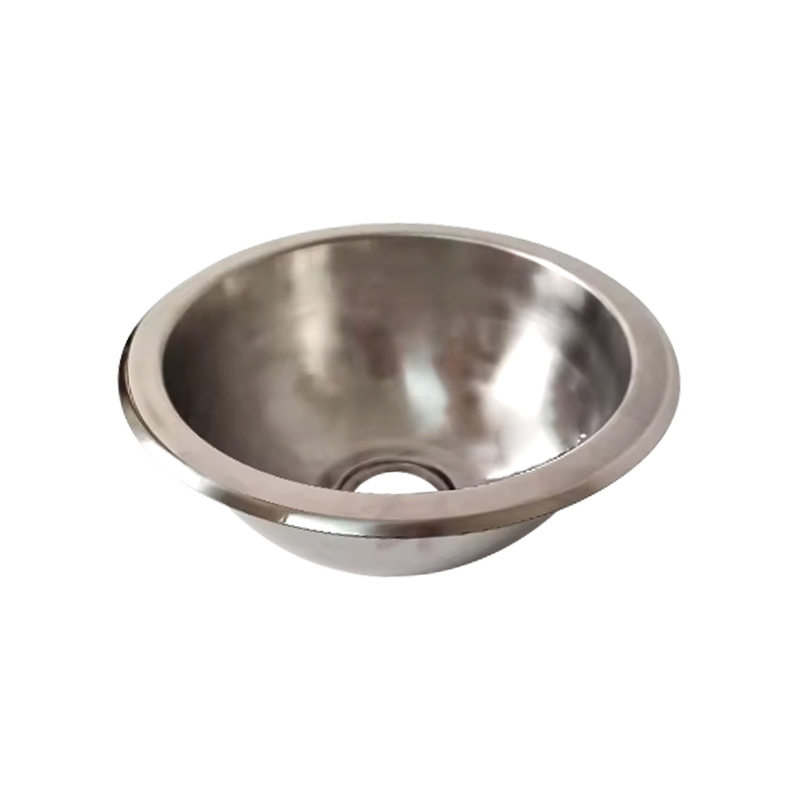
At its core, deep drawing is a sheet metal forming process in which a sheet metal blank is radially drawn into a forming die by the mechanical action of a punch. It is considered "deep" drawing when the depth of the drawn part exceeds its diameter.
The process begins with a flat sheet of metal, which is placed over a die cavity. A punch then forces the metal into the cavity, stretching it into a specific shape—usually a cup, cylinder, or box-like structure. Unlike simple bending, deep drawing involves complex material flow and deformation, requiring a deep understanding of metallurgy and mechanical engineering.
The primary advantage of deep drawing is its ability to produce complex, seamless shapes with high structural integrity. Because the part is formed from a single piece of metal, there are no seams or welds, which are often the weakest points in a component. This results in parts that can withstand higher pressures and more rigorous environments.
One of the most common questions customers ask is whether their specific material can be used in the deep drawing process. The versatility of this manufacturing method is one of its greatest strengths.
Stainless steel is perhaps the most popular choice for deep drawing. It offers exceptional corrosion resistance, high strength, and a sleek aesthetic finish. It is widely used in food service, medical equipment, and marine applications.
For applications where cost-efficiency and high strength are priorities, carbon steel is an excellent choice. It is incredibly durable and can be treated with various surface finishes to prevent rust.
Aluminum is favored for its high strength-to-weight ratio. It is naturally corrosion-resistant and highly conductive, making it a staple in the aerospace and electronics industries.
These materials are often chosen for their electrical conductivity and thermal properties. Additionally, their unique aesthetic appeal makes them popular for decorative architectural components.
By using galvanized steel, manufacturers provide an added layer of protection against the elements, making it ideal for outdoor structural components.
When sourcing custom metal parts, the quality of the mold (or die) is the single most important factor. Many customers ask, "Why does it matter if the mold is designed in-house?"
When a manufacturer handles the design, production, and assembly of molds in-house, they have total control over the specifications. This eliminates the "lost in translation" errors that can occur when outsourcing tool design to a third party.
In-house mold production significantly reduces lead times. If a design needs a slight adjustment after the initial prototype, it can be handled immediately on the shop floor rather than waiting weeks for an external tool shop to make the change. This agility is a massive competitive advantage in today's fast-paced market.
A metal part isn't finished just because it has been shaped. The surface treatment is what prepares the part for its working environment. Here are the most frequently requested finishes:
Powder Coating: Provides a thick, durable, and colorful protective layer that is resistant to chipping and scratching.
Zinc/Nickel/Chrome Plated: These electrolytic processes add a layer of metal to the surface to improve corrosion resistance and provide a shiny, professional look.
Anodizing: Specifically for aluminum, this process thickens the natural oxide layer, making it harder and more resistant to wear.
Polishing and Brushing: These are mechanical finishes used to achieve a specific texture or shine, ranging from a mirror-like glow to a sophisticated "satin" look.
Passivation: Essential for stainless steel, this chemical treatment removes free iron from the surface, maximizing its natural corrosion resistance.
KTL (E-Coating): An automated process that uses electrical current to apply a uniform, high-coverage primer that reaches every crevice of a complex part.
Is deep drawing cost-effective? For small runs, the initial cost of the mold can be a barrier. However, for medium to high-volume production, deep drawing is one of the most economical methods available.
Once the mold is perfected, the cycle time for each part is incredibly fast. Furthermore, the process minimizes material waste. Unlike CNC machining, where a large block of metal is "carved away" (creating scrap), deep drawing uses nearly all of the initial metal blank, making it a more sustainable and cost-effective solution for mass production.
"How do I know my parts will fit?" This is a concern for every engineer. The answer lies in the combination of advanced technology and rigorous testing.
Manufacturers utilize high-precision measuring tools, such as Coordinate Measuring Machines (CMM), to ensure that every dimension aligns with the customer's CAD design. Because the deep drawing process is highly repeatable, once the first article is approved, the 10,000th part will be virtually identical to the first.
When you are looking for Deep Drawn Custom Sheet Metal Stainless Steel Punching Deep Drawing Parts, you aren't just looking for a vendor; you are looking for a partner. The right manufacturer should offer:
Engineering Support: Can they help you refine your design to make it more "formable" and save you money?
Material Expertise: Do they understand how different grades of steel react under pressure?
End-to-End Solutions: From the initial drawing to the final surface finish and assembly, a one-stop-shop reduces risk and complexity.
As we look toward 2026 and beyond, the demand for lightweight, high-strength components is only growing. Electric vehicles, renewable energy systems, and advanced robotics all rely on the precise, seamless metal parts that only deep drawing can provide.
The industry is also seeing a shift toward "smart manufacturing," where sensors within the dies can monitor heat and pressure in real-time, ensuring even higher levels of quality than were possible just a decade ago.
Deep drawing is a perfect marriage of old-world mechanical force and modern engineering precision. Whether you need a simple galvanized steel cap or a complex, multi-stage stainless steel housing, understanding the materials, the mold-making process, and the finishing options is key to a successful project.
By choosing a partner who manages the entire lifecycle of the part—from design to final coating—you ensure that your project is delivered on time, within budget, and to the highest possible standards.
版权所有© 宁波达升金属制品有限公司